
Rwanda’s remarkable journey of recovery and resilience is showcased through its four major national parks: Volcanoes, Gishwati-Mukura, Akagera, and Nyungwe. These parks, each with its unique history, have been central to the nation’s conservation efforts, transforming Rwanda into a beacon of environmental stewardship and a premier ecotourism destination. Visitors can explore diverse ecosystems, engage in activities like gorilla and chimpanzee tracking, savannah safaris, and witness thriving wildlife populations, all while supporting local communities through sustainable tourism.
Volcanoes National Park
Volcanoes National Park, is Africa’s oldest national park, established in 1925 to protect endangered mountain gorillas from poaching. Spanning 61 square miles, the park protects five of the eight Virunga Mountains’ volcanoes—Karisimbi, Bisoke, Muhabura, Gahinga, and Sabyinyo—and is home to mountain gorillas, golden monkeys, and diverse plant species.
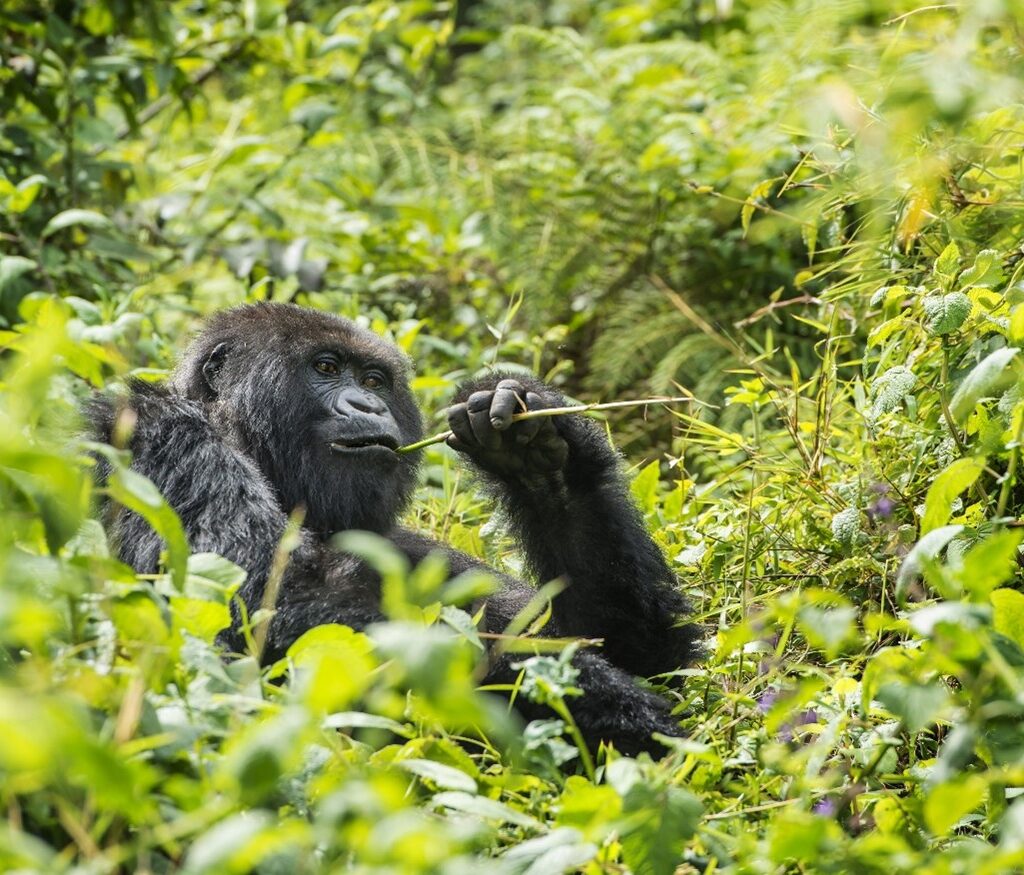
Half of the world’s remaining gorilla population resides in Volcanoes National Park, where Dian Fossey spent 20 years researching the beloved primates. Currently, there are 12 habituated families of mountain gorillas in the park that are specifically tracked for visitor interaction. As you can imagine, gorilla treks are high on many adventure traveler’s buckets lists. However, limited numbers of daily trekking permits make it imperative to book well in advance.
Another once-in-a-lifetime primate interaction in Volcanoes National Park is trekking to see habituated golden monkeys. Similar to trekking gorillas, a special permit is required for a private guided hike. But an up-close and personal view of the monkeys in their natural habitat is an adventure you’ll never forget.
Gishwati-Mukura National Park
Just 30 years ago, the Gishwati and Mukura forests were on the fast track to extinction, including their wildlife and primate residents. But thanks to conservationists, the Gishwati-Mukura ecosystems were granted joint national park status in 2015. Besides protecting the established areas of each forest, a buffer zone of trees was created with a long-term plan to reestablish a wildlife corridor connecting the park to Nyungwe Forest. It is now one of the best examples of ecotourism with all proceeds contributing to restoration, protection and conservation of the environment and surrounding communities. Guests can visit the surrounding communities and learn how the park’s natural resources sustain their livelihoods.
When the park first opened, there were about 20 chimps that resided in the park, but efforts are set to more than triple the Gishwati-Mukura National Park’s East African chimpanzee population. Beyond the chimpanzees, which are a huge draw for tourism to the area, the Gishwati-Mukura National Park is a sanctuary for other primates like golden monkeys, blue monkeys, and L’Hoest’s monkeys. Black and white colobus monkeys have also been spotted by conservationists.
Akagera National Park

Akagera National Park became home to the first lions Rwanda had seen in 15 years, and with the return of lions to the park, the natural balance of the ecosystem is making its return. In 2022, thirty white rhinos were translocated from South Africa and released into the park.
Nyungwe Forest National Park
Believed to be one of Africa’s oldest forests, Nyungwe’s 370 square miles of mountainous rain forest, lush grassland, and swamps create habitats supporting many distinct species. Nyungwe Forest became a reserve in 1933 to protect it from increased threats of agricultural clearing. In 2004, it was declared a national park. Since then, it has seen an increase in the number of visitors who travel there each year to seek out primates.
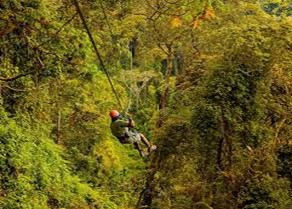
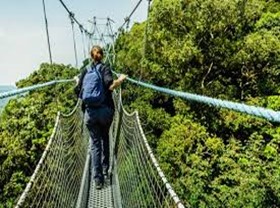
While Volcanoes National Park might take top billing in Rwanda for its gorilla trekking, Nyungwe Forest National Park is an essential stop on any primate itinerary in Rwanda. The park shelters more than 25-percent of Africa’s primate species. A trek through the park offers a chance to see 14 different species of primates, including the L’Hoest monkey, owl-faced monkey, black and white colobus, and chimpanzee. A dense butterfly population thrives in the park, as well as a number of endemic plants and animals not found anywhere else in Africa. A must-do while in the park is the Nyungwe Forest National Park Canopy Walk. The 295-foot bridge, suspended 130 feet above the ground, brings you eye level with the different primate species and various birdlife hidden within the tree canopy.
Ready to Explore Rwanda’s National Parks?
For more information about planning a luxury Rwanda safari and visiting the parks, Contact Our travel experts. To stay up to date on all of our online content, follow us on www.muganzisafaris.com
Have Questions?
Talk to Our Travel Designer
Get advice and suggestions to make this your perfect trip.