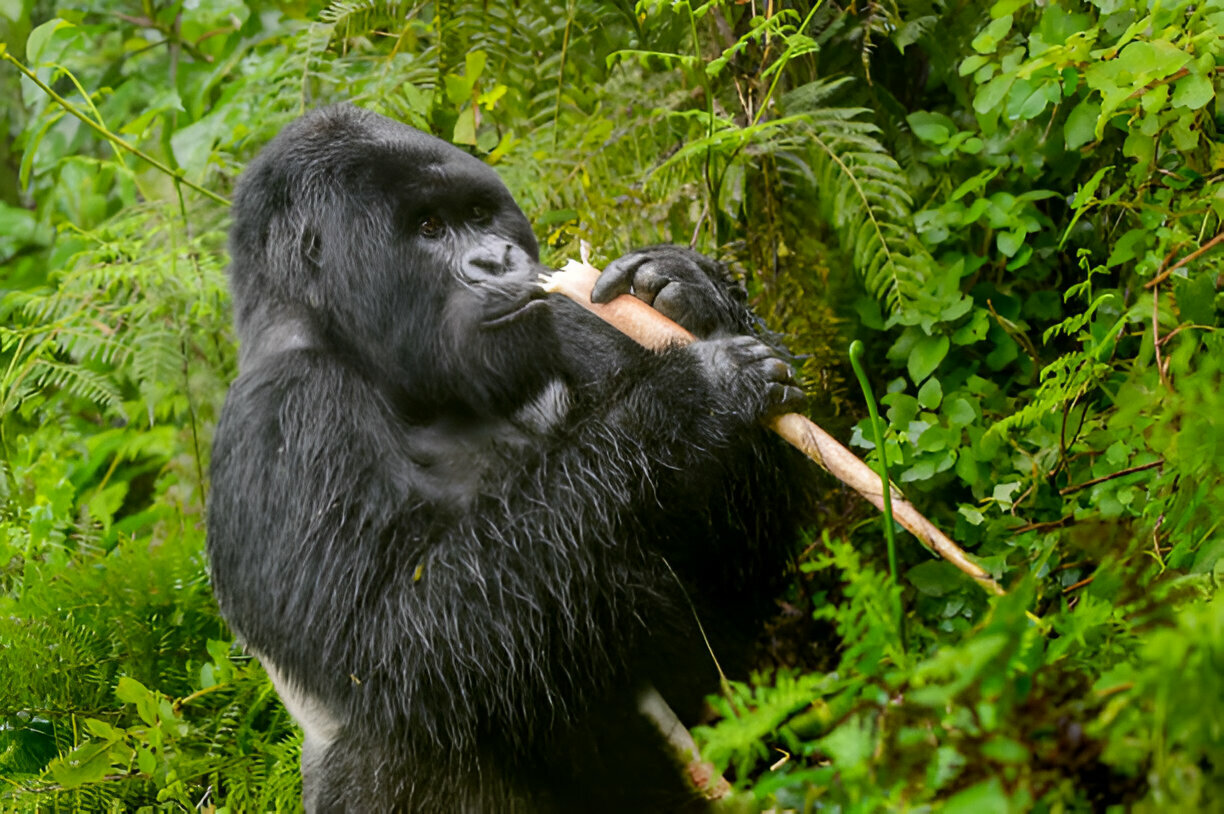
A gorilla trekking permit costs $800 USD for foreign non-residents in Uganda. It covers park entrance for 24 hours, armed ranger guides, trackers, and one hour of direct viewing with the mountain gorillas. It does not cover lodging, transport, or tips.
What is Included in a Gorilla Permit?
- Park Access: 24-hour conservation and entrance fee for Bwindi Impenetrable National Park or Mgahinga Gorilla National Park.
- Ranger Guidance: Professional armed rangers and lead trackers who guide you through the jungle.
- Gorilla Encounter: Exactly one hour of observation and photography once you locate the habituated family.
- Conservation Funding: Direct contribution to local community projects and wildlife protection.
What is excluded from a Gorilla Permit?
- Accommodation: Nightly lodge or camp fees before and after your trek.
- Transportation: Fuel, 4×4 vehicle rental, or domestic flights from Entebbe International Airport or Kampala to the parks.
- Porters: Hiring local community porters to carry your heavy bags during the hike.
- Tips and Gratuities: Appreciation money for your ranger guides, trackers, and drivers.
- Personal Gear: Hiking boots, rain jackets, cameras, and personal medical insurance.
How physically demanding is gorilla trekking in Uganda?
Gorilla trekking in Uganda is considered moderately to highly demanding, requiring a reasonable level of fitness. Hikes in Bwindi Impenetrable National Park or Mgahinga Gorilla National Park last anywhere from 2 to 7 hours over steep, uneven terrain, thick jungle vines, and high altitudes ranging up to 2,600 meters (8,500 feet).
Key Factors That Influence Difficulty
- Terrain: Steep, slippery slopes, muddy paths during wet seasons, and thick undergrowth with no fixed trails.
- Duration: Completely unpredictable; you might find a gorilla family in 45 minutes, or hike uphill for over 6 hours tracking fresh tracks.
- Altitude: Walking between 1,160 and 2,700 meters can cause shortness of breath and added fatigue.
Tips to Manage the Physical Strain
- Hire a local porter: Available at the trailhead, porters can carry your heavy daypack and literally push or pull you through slippery patches.
- Use a walking stick: Usually provided at the briefing point to help maintain balance on steep inclines.
- Pace yourself: Guides go at the speed of the slowest group member, and you can request shorter, easier family assignments during your morning briefing if you voice concerns to park rangers.
- Train beforehand: Simple cardio, stair climbing, and long walks a few weeks before your trip make a massive difference.
Contact us for bookings and inquiries.