Kibale Forest National Park in west Uganda is a paradise for nature- and animals-lovers. It has an astonishing array of primates, mammals and birds. It also offers excellent nature trails. And it’s close to many other must-see attractions.
1. You can go chimpanzee tracking
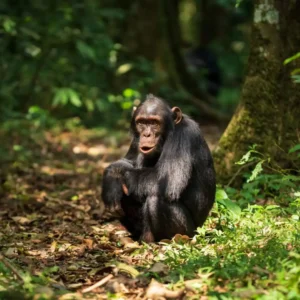
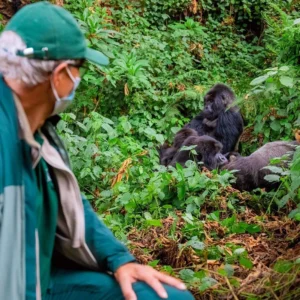
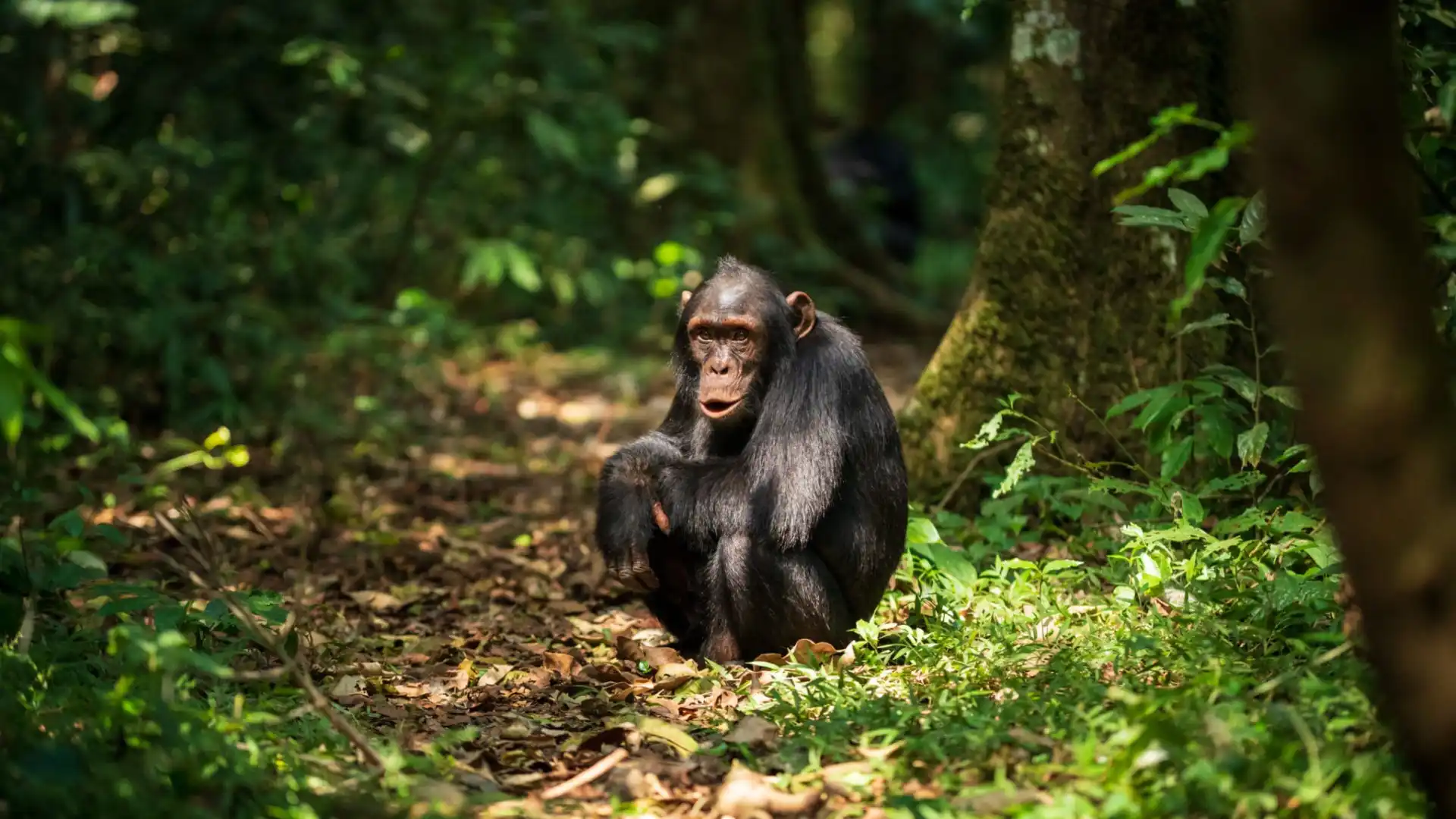
Chimps are the star attraction in Kibale Forest NP. Similar to gorilla trekking, you can go chimpanzee tracking here. A trained guide takes a small group on a tracking hike to see these magnificent animals in their natural habitat. Once you find a family, you get to spend some time with them, observing their behaviors.
We highly recommend adding chimp tracking to your Uganda adventure
2. Its home to 12 other primate species
If you like primates, then Kibale Forest National Park is your place. It’s home to a whopping 13 primate species – more than any other national park in Uganda. (And more than many countries, come to that!) We introduce you to them all … and if we were betting folks, we’d bet that you haven’t heard of them all before now!
Baboons are one of the most aggressive of apes, and needed to be treated carefully and given space. They’re omnivores and have a wide, sometimes opportunistic diet and are adaptable to many kinds of habitats, including even coastlines.
Uganda grey-cheeked mangabey
The Uganda grey-cheeked mangabey lives only in a small area of the country. Its numbers are unknown, so scientists can’t confidently say if it’s endangered or not.
Grey-cheeked mangabeys spend much of their time on the ground.
L’Hoest’s monkey
LHoest’s monkeys are one the so-called mountain monkeys, and have tails that can grow as long as 80 cm. The white ‘beard’ is a dead giveaway that you have a l’Hoest’s monkey on your hands.
Black-and-white colobus
The word colobus is from the Greek word kolobós which refers to astump-like thumb.
Black-and-white colobuses perform a meeting ritual when reunited with those they know, and this ritual can include embracing.
Uganda red colobus
The red colobus is a vegetarian, eating only flowers, leaves and unripe fruit.
Surprisingly, these colobuses are sometimes preyed on by chimpanzees. When attacked, the troop gathers together, and the males will fight off the attacker while the females and infants try to escape.
Red-tailed monkey
The red-tailed monkey has a few other names you can choose from: black-cheeked white-nosed monkey, red-tailed guenon, or Schmidt’s guenon. But that tail is a giveaway when it comes to identifying this particular primate. And that tail can reach up to 35 inches, or nearly 90 cm!
Patas monkey
The patas (or hussar) monkey has striking colouring and is easier than some other monkeys to spot because it spends most of its time on the ground.Patas monkeys can run as fast as 55 km per hour! What’s also very interesting is that they don’t put their whole hand on the ground when walking – just the fingertips
Potto
The potto is about 30 to 50 cm in length, has round ears, and unlike most other primates only has a stubby 5 cm-ish tail. On each foot it has just one toe that’s a claw, which looks rather frightful, but is very functional as its used for grooming.
The potto is nocturnal, so you’re unlikely to spot one on a day hike.
Galago
Kibale Forest is also home to the northern lesser galago. Another nocturnal primate, it’s also around 30 to 50 cm in length, but unlike the potto it has a long, fluffy tail.
Vervet monkey
Vervets are one of Africa’s most widespread species of monkey. Their dark faces meet a white stripe across the forehead. They’re not shy and will steal food from humans, so don’t wave your fruit and snacks about when eating!
Blue monkey
The blue (or diademed) monkey is a wide-faced primate that has a white forehead band and darkly coloured head. The ‘blue’ in its name is a little misleading, as only sometimes can you notice a bluish tinge to its fur.
Blue monkeys often hang out with red-tailed monkeys for protection, and the two species will groom each other.
3. The bird spotting is next level
There’s exciting birdlife to enjoy on a trip to Kibale Forest National Park, especially in the marshlands. Some of the birds you might see are:
- violet-backed starling
- green-breasted pitta
- African pitta
- black bee-eater
- dusky crimson-wing
- purple-breasted sunbird
- blue-breasted kingfisher
- Eastern nicator
- yellow-rumped tinkerbird
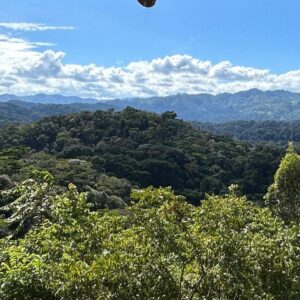
4. The nature walks and hikes are BEAUTIFULYou can do wonderful nature walks and hikes in Kibale Forest National Park, though please note that some are seasonal. There’s a lovely 12 km hike, for instance, that’s doable in the dry seasons (which are November to February and June to September). On the hike you explore tropical rainforest, grassland, riverine forest and swampland. You can hope to see elephants, various antelopes, primates and numerous birds.
5. It’s close to other epic destinations
Southwest Uganda has so much to offer nature- and adventure-lovers. So when you visit Kibale Forest, you’re also close to many other exciting destinations.
Let’s take a look at some of the best and closest;
Bigodi Wetland Sanctuary
Right next door to Kibale Forest National Park is Bigodi Wetland Sanctuary. Here you can see many of the same primates as inhabit Kibale Forest, but also marshbucks (or sitatungas), bushbucks, mongooses, bush pigs and otters. And of course the birds are phenomenal too, with around 200 species to be spotted, including the great blue turaco.
Semuliki National Park
On Kibale Forest’s other doorstep, as it were, is Semuliki National Park. The park has the country’s largest population of Ugandan kobs, as well as many other large mammals like lions, leopards and forest elephants. It also has around 420 bird species! So bird, nature and animal lovers should prioritise a visit.
Rwenzori Mountains
As you can see in the map above, Kibale Forest National Park is also very close to the Rwenzori Mountains. The Rwenzoris offer world-class and uncrowded hikes and multiday treks among exotic plants and some of Africa’s highest peaks. In fact, Mt Stanley is Africa’s third highest mountain at 5,119 m (16,795 ft).
Queen Elizabeth National Park
Queen Elizabeth National Park is a world-class safari destination where you can see greats like lions, leopards and giraffes on safari drives, and other greats like crocs, elephants and hippos on boat safaris.
Mountain gorillas of Bwindi Forest
You’re also not far north of Bwindi Impenetrable National Park where you can go gorilla trekking! Gorilla trekking is the showpiece of our Uganda trips, and we’ve yet to meet anyone who doesn’t rave about this adventure!
We offer adventure packages to all of these exciting destinations, so please drop us a line or look at our SAFARI ITINERARIES to learn more. Don’t see precisely what you want? Not to worry – we’re more than happy to tailor a trip to meet your exact requirements.