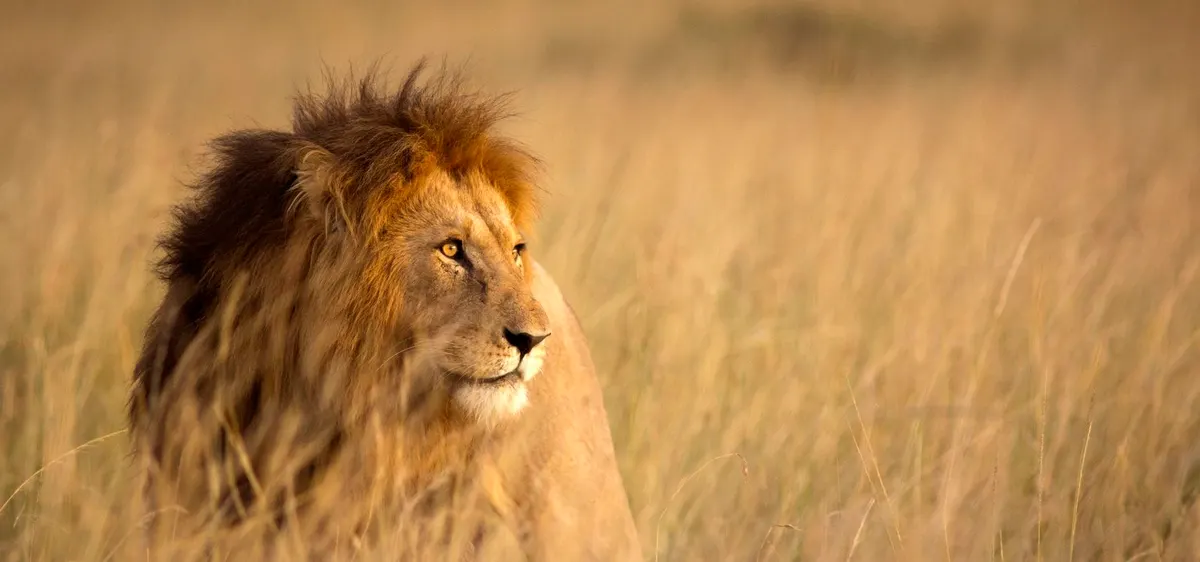
Jacob, the legendary 12-year-old tree-climbing lion of Uganda’s Queen Elizabeth National Park is an icon of survival. Despite losing a hind leg to a poacher’s snare and an eye to a buffalo, he has defied impossible odds—including setting a world record for swimming across the crocodile-infested Kazinga Channel.
Introduction: The Legend of Africa’s Most Resilient Predator
In the heart of the Great Rift Valley, nestled within the sprawling savannas of Uganda, roams a creature whose very existence redefines the laws of the wild. Meet Jacob, widely celebrated by biologists and safari-goers alike as the “Invincible” lion of Queen Elizabeth National Park.
At roughly twelve years of age, Jacob has accomplished feats that fully limbed, apex predators would shy away from. Surviving in one of Africa’s most diverse ecosystems is a daily battle, but for Jacob, the struggle has been multiplied by human interference and brutal natural encounters. His life is a testament to perseverance, grit, and the extraordinary adaptability of the animal kingdom.
A Tapestry of Peril: Jacob’s Early Battles
Long before he became a symbol of hope, Jacob’s life was fraught with danger. Like many of his counterparts in the famous Ishasha Sector, Jacob is a tree-climbing lion—a unique behavioral trait found in very few lion populations across Africa. This behavior offers the cats a vantage point over the savanna and a refuge from biting insects.
However, this region is heavily impacted by human activity, poaching, and agriculture. Between 2018 and 2020, Jacob faced a punishing series of ordeals:
- The Snare Trap: In 2018, Jacob stepped into a poacher’s wire snare. Though he was rescued by conservationists, the severe trauma eventually resulted in the loss of his left hind leg.
- Buffalo Gore: Shortly after his injury, he suffered a horrific run-in with a Cape buffalo, which gored him and cost him one of his eyes.
- The Pride Poisoning: In 2020, tragedy struck his pride when poachers poisoned six members of his family. Jacob miraculously escaped the poisoning.
Most experts wrote him off. A tripod lion with a missing eye usually struggles to survive. Without the high-speed chases typical of a lion’s hunting style, scavengers or disabled lions usually perish in the unforgiving savannah. Yet, Jacob refused to give in to his circumstances.
A Leopard in Lion’s Clothing: Jacob’s Evolutionary Adaptation
Unable to rely on pure strength and numbers, Jacob had to rethink how to survive. With the help of the Kyambura Lion Monitoring Project and thermal drone technology, researchers discovered exactly how the three-legged king hunted.
Instead of roaming open plains and executing high-speed, 50-mph takedowns on grazing antelopes, Jacob shifted to a tactic entirely more akin to a leopard. He began utilizing dense thickets, scrub forests, and impenetrable vegetation. By setting close-range ambushes, hiding in the dark, and even digging out prey from burrows, he maximized the element of surprise. He has been recorded hunting alone and frequently targets large, 200-kg forest hogs that other lions would completely ignore.
The Incredible Swim: Breaking Records to Find Love
Jacob’s defiance of nature did not stop on land. In a first-of-its-kind, world-record event, Jacob and his loyal brother, Tibu, mounted a life-threatening swim across the mile-wide Kazinga Channel in Uganda.
The channel is notorious for harboring massive populations of Nile crocodiles and hippos. But driven by an urgent need to find mates and establish new territory, the two brothers took the plunge, swimming over a mile through the perilous waters. This behavior is a direct symptom of human-induced habitat fragmentation and skewed male-to-female lion ratios. Despite his disability, Jacob completed the crossing, proving that his drive to reproduce and pass on his invincible genes eclipses any natural fear.
The Threats Facing Queen Elizabeth National Park
Jacob’s story serves as much more than a fascinating wildlife tale; it is an ambassador for conservation awareness. Queen Elizabeth National Park is a massive biodiversity hotspot, but it is under immense pressure.
- Human-Wildlife Conflict: With over 60,000 residents living in and around the park, lions frequently come into contact with livestock. Retaliatory killings and illegal poaching pose severe threats to the roughly 20,000 remaining lions in the wild.
- Poaching Snares: Poachers setting traps for antelopes and other bushmeat regularly catch apex predators like Jacob, tearing limbs and causing long-term, disabling injuries.
- Skewed Sex Ratios: Poisoning incidents target female lions, which creates a disproportionate number of male lions competing for a dwindling number of females. This drives big cats to make increasingly dangerous journeys, like Jacob’s swim across the Kazinga Channel.
Conservation Efforts and the Future of East Africa’s Lions
To protect iconic animals like Jacob, organizations such as the Wildlife Conservation Society and the Uganda Wildlife Authority are implementing multidimensional tracking and rehabilitation programs.
By fitting animals with satellite GPS collars, researchers can monitor their real-time movements. This allows rangers to rapidly intervene if a lion steps into a poachers’ trap or strays too close to community farmlands. These organizations also conduct frontline community awareness programs, teaching thousands of locals about the economic and ecological value of lions.
How to Experience Queen Elizabeth National Park
If you are planning an East African safari, Queen Elizabeth National Park is one of the premier destinations for wildlife enthusiasts. Located in western Uganda, the park spans roughly 1,978 square kilometers and boasts an incredible array of ecosystems, including grassy plains, tropical forests, and sparkling crater lakes.
The park is roughly a 6-to-7-hour drive from the Ugandan capital of Kampala. It offers a variety of accommodations, from luxury lodges on the Mweya Peninsula to community-run campsites.
Top Activities for Visitors:
- The Kazinga Channel Boat Cruise: This is an absolute must. It offers unparalleled views of the channel where Jacob set his swimming record. You will float past hundreds of hippos, Nile crocodiles, and massive flocks of waterbirds.
- Game Drives in the Kasenyi Plains: This is where you have the highest chance of spotting lions and vast herds of Uganda kob.
- Tracking the Tree-Climbing Lions: Head to the Ishasha sector in the southern part of the park for a chance to spot these majestic big cats lounging in fig trees.
- Chimpanzee Tracking: Explore the Kyambura Gorge to track habituated chimpanzees swinging through the rainforest canopy.
Jacob’s Legacy: Why We Love the Lion with Nine Lives
Jacob has rewritten the laws of nature. In the wild, disability usually equals death. But through sheer willpower and perhaps a little help from his loyal brother Tibu, Jacob has outlived expectations. His scars and missing limb tell a powerful story of survival, strength, and adaptability.
For conservationists, Jacob is “symbolically and genetically invaluable”. He shows us how animals are capable of innovating in a human-dominated world. His behavioral shifts may even hold clues as to how big cat populations will endure ongoing climate and habitat pressures.
For tourists and nature lovers, Jacob is a reminder that courage can come in the most unexpected forms. He has become an international celebrity, capturing hearts and drawing attention to the urgent need for global lion conservation.
Tips for Planning Your Ugandan Safari
When traveling to Uganda to witness the magic of Queen Elizabeth National Park, careful planning ensures an unforgettable and responsible safari experience:
- Book Permits Early: If you also plan to track mountain gorillas in Bwindi Impenetrable National Park, which is often combined with a Queen Elizabeth itinerary, gorilla permits must be booked months in advance.
- Choose Responsible Operators: Select local tour operators that are certified by the Uganda Tourism Board and emphasize low-impact, sustainable tourism.
- Respect Wildlife: Always maintain a safe distance and follow your guide’s instructions. A good safari requires patience, as the best sightings happen when you respect the animals’ natural rhythms.
- Support Local Communities: Buying local crafts, staying at community-operated lodges, and tipping guides directly benefits the local economy and incentivizes wildlife conservation.
Conclusion: The Unbreakable Spirit
In an era where wildlife populations face unprecedented threats, Jacob’s journey stands out as a brilliant beacon of hope. He did not break under the crushing weight of poachers, poison, or his physical impairments. Instead, he bent, adapted, and conquered.
Whether you are watching a lion pride sleep lazily on the savanna, taking a boat cruise down the Kazinga Channel, or spotting a male lion scanning the plains from a fig tree, the spirit of Jacob lingers in the air. He proves that perseverance defies nature’s harshest odds, and that the heart of a lion is an unstoppable force
If you are interested in planning a trip to Queen Elizabeth National Park to see Jacob and other wildlife, let me know:
- Your budget and preferred travel dates
- Whether you want to combine this with gorilla trekking
- How many days you have for your safari itinerary
I can help put together a tailored, responsible safari plan.