
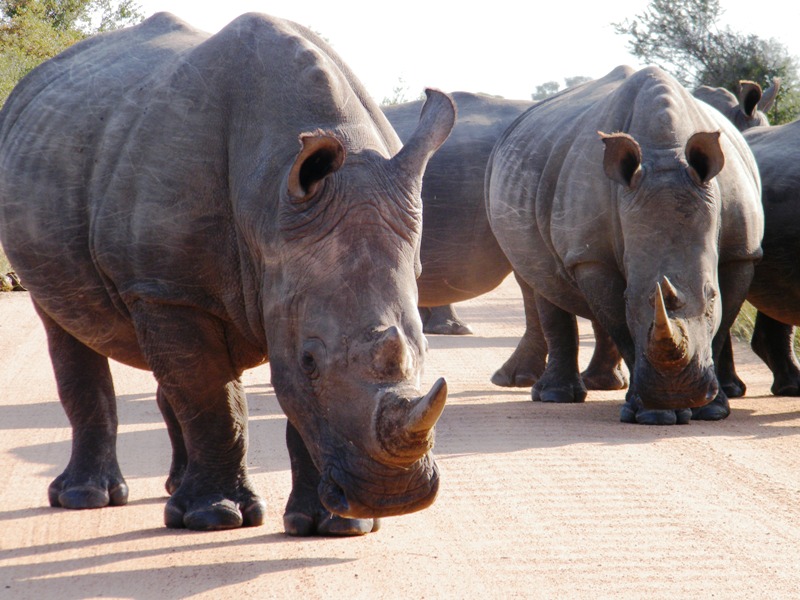

Rhinoceroses are some of the planet’s most iconic and prehistoric-looking creatures. Sadly, they are also among the most threatened. Here’s a deep dive into the fascinating world of rhinos, the challenges they face, and why their survival matters.
What is a Rhino?
Rhinos are large, herbivorous mammals instantly recognized by the distinctive horns on their snouts. The name itself comes from the Greek words “rhino” (nose) and “ceros” (horn). There are five surviving species of rhino, and they are divided into two categories: one-horned and two-horned.
The Rhino Horn Crisis: Why Are They Poached?
The single greatest threat to rhinos is poaching, driven by the illegal international trade in their horns.
-
Mythical Medicine: In some traditional medicine systems, particularly in parts of Asia, rhino horn is ground into a powder and believed to cure everything from fevers and rheumatism to hangovers. It is also incorrectly thought to be a powerful aphrodisiac.
-
Status Symbol: The horns are also carved into ornate dagger handles, known as jambiyas, which are seen as status symbols in some cultures.
-
The Shocking Truth: A rhino’s horn is not made of bone. It is composed of keratin, the same protein that makes up our own hair and fingernails. This means consuming rhino horn has no more medicinal value than chewing your own fingernails.
Conservation Status: A Grim Picture
The situation for rhinos is critical. At the start of the 20th century, over 500,000 roamed Africa and Asia. Today, that number has plummeted to around 29,000 in the wild due to relentless poaching and habitat loss.
Here is the status of each species, as listed by the International Union for Conservation of Nature (IUCN):
-
Critically Endangered (Facing an extremely high risk of extinction):
-
Javan Rhino: Perhaps the rarest of all large mammals, with only 35-44 individuals remaining.
-
Sumatran Rhino: Fewer than 100 survive in fragmented populations.
-
Black Rhino: Numbers are slowly improving thanks to conservation, but only about 5,055 exist.
-
-
Vulnerable (Could become endangered):
-
Greater One-Horned Rhino: A conservation success story! Their population has grown to over 3,333 due to strict protection in India and Nepal.
-
-
Near Threatened:
-
White Rhino: The southern white rhino subspecies has rebounded to ~20,405 individuals. However, the Northern White Rhino is functionally extinct. Only two females, Najin and Fatu, remain under guard in Kenya. Scientists are now racing against time using in vitro fertilization (IVF) to save this subspecies from complete extinction.
-
Fascinating Rhino Biology & Behavior
-
Habitat: Depending on the species, rhinos live in grasslands, floodplains, and tropical rainforests across Africa and Asia.
-
Diet: As herbivores, they graze on grasses and browse on leaves, shoots, and branches. Their snout shape is perfectly adapted for their preferred food source.
-
Social Life: Known as a “crash” when they group together, rhinos are often solitary. They love wallowing in mud, which acts as a natural sunscreen and insect repellent.
-
Young: A baby rhino, called a calf, can weigh up to 140 pounds (64 kg) at birth! It will stay with its mother for 2-3 years.
-
Lifespan: Rhinos can live up to 45 years in the wild.
Did You Know? Fun Rhino Facts
-
Teamwork: The oxpecker bird and the rhino have a symbiotic relationship. The bird eats ticks off the rhino’s skin and lets out a loud call to warn of approaching danger.
-
They “Talk”: A contented rhino makes a loud, happy sound spelled “mmwonk!”
-
Misleading Name: Black rhinos aren’t actually black. The name likely came from the dark, wet mud they wallow in or to distinguish them from white rhinos.
-
Ancient Relatives: Woolly rhinos, hunted by early humans and depicted in cave paintings, went extinct about 10,000 years ago.
How You Can Help
The fate of the rhinoceros rests in our hands. You can support their survival by donating to reputable organizations, spreading awareness about the irrelevance of rhino horn in medicine, and advocating for stronger wildlife protection laws.
Together, we can ensure these magnificent giants don’t become a footnote in history.

