
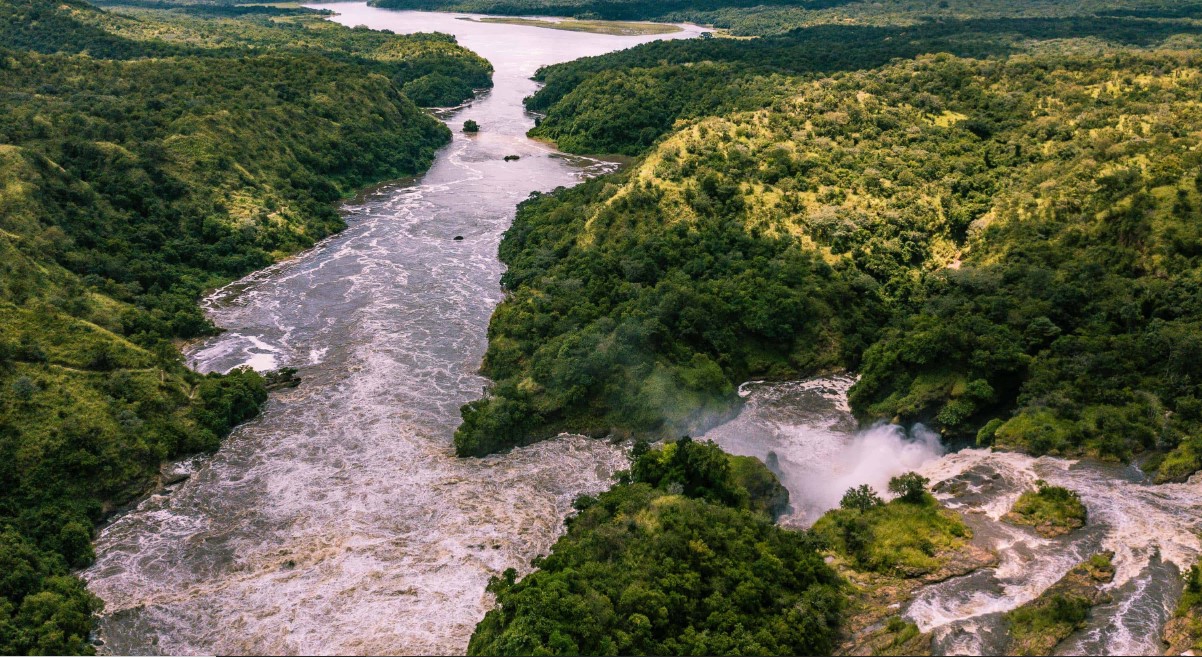
Murchison Falls National Park is Uganda’s largest and oldest conservation area, renowned for the spectacular Victoria Nile waterfall and diverse wildlife. Located in northwestern Uganda, this 3,893-square-kilometer park offers thrilling game drives, boat cruises, chimpanzee trekking, and bird watching, making it a premier African safari destination.
The Ultimate Guide to Murchison Falls National Park: Introduction:
Why Murchison Falls National Park?
When planning an African safari, travelers often look for the perfect blend of raw wilderness, diverse wildlife, and breathtaking natural wonders. Murchison Falls National Park (MFNP) easily delivers on all fronts. As Uganda’s largest and oldest protected area, established in 1952, it covers nearly 3,893 square kilometers of untamed savanna, riverine forests, and rolling grasslands.
At the absolute heart of the park is its namesake attraction: Murchison Falls. Here, the mighty Victoria Nile is forced through a narrow, eight-meter-wide gorge before plunging 45 meters down into the “Devil’s Cauldron.” This creates the world’s most powerful waterfall, producing a thunderous roar and permanent rainbow mist that will leave you absolutely spellbound.
Beyond the spectacular waterfall, the park is a sanctuary for a rich array of African wildlife. Home to over 76 mammal species—including four of the “Big Five” (lions, leopards, elephants, and buffaloes)—and more than 450 bird species, it is a biodiversity hotspot that promises an unforgettable safari experience.
History and Significance
To truly appreciate a destination, understanding its history is essential. Murchison Falls National Park has a rich backstory that spans centuries of exploration, conservation, and survival.
The Origins of the Park
Before it was a designated national park, the region was inhabited by local communities and traversed by early explorers. In 1864, the British explorer Sir Samuel Baker and his wife, Florence Baker, became the first Europeans to see the falls. He named them after Sir Roderick Murchison, who was the president of the Royal Geographical Society at the time.
In 1952, recognizing the ecological importance and breathtaking beauty of the area, the British colonial administration officially gazetted it as a national park. It was one of the first national parks in East Africa, cementing Uganda’s commitment to wildlife preservation.
Conservation Challenges and Triumphs
Like many African parks, MFNP faced dark periods, particularly during the political instability of the 1970s and 1980s. Poaching became rampant, and animal populations plummeted. The park’s rhinos, which once thrived in the area, were sadly driven to local extinction.
Today, the narrative is one of incredible recovery and triumph. Thanks to strict conservation efforts by the Uganda Wildlife Authority (UWA), populations of elephants, buffaloes, and giraffes have rebounded significantly. While rhinos are no longer in the park, travelers can track them on foot at the nearby Ziwa Rhino Sanctuary, managed by the Rhino Fund Uganda.
The Majestic Murchison Falls: The World’s Most Powerful Waterfall
You cannot visit this national park without spending ample time at the falls. The raw power of the Victoria Nile River is a sight that few destinations in the world can match.
The Geography of the Falls
The Victoria Nile flows through the center of the park, creating a natural divide between the northern and southern sectors. As the river makes its way towards Lake Albert, it encounters a stubborn ridge of the Rift Valley wall. Forced into a tight cleft that is just eight meters wide, an unimaginable volume of water—around 300 cubic meters per second—is squeezed through and plunges 45 meters down into the gorge.
The Devil’s Cauldron and Rainbows
The impact of the water hitting the bottom of the gorge creates a frothing, turbulent pool known as the “Devil’s Cauldron.” The immense pressure and spray generate a permanent mist, which frequently catches the equatorial sunlight to produce vibrant, mystical rainbows.
Viewing Points for the Falls
There are two primary ways to experience the falls, and doing both is highly recommended:
- The Bottom of the Falls: Viewed from the water during the famous launch cruise.
- The Top of the Falls: Accessed via a hiking trail or a vehicle track, allowing you to stand right at the edge of the gorge and feel the earth shake beneath your feet.
Wildlife and Biodiversity
Murchison Falls National Park harbors Uganda’s largest wildlife populations. Its diverse habitats—ranging from open Borassus palm savannas to lush riverine woodlands—provide a haven for a massive variety of animals.
The Mammals of the Park
The park is home to over 76 species of mammals. While you are on safari here, you can expect to see:
- African Elephants: MFNP boasts Uganda’s largest elephant population. These gentle giants are frequently seen roaming the savanna or drinking at the river’s edge.
- Rothschild’s Giraffes: This is a crucial stronghold for one of the most endangered giraffe subspecies. They are easily spotted in the northern sector, often walking gracefully between palm trees.
- Lions and Leopards: The open savannas north of the Nile are prime territories for big cats. Lions are regularly spotted resting under acacia trees or hunting Uganda kobs.
- Cape Buffaloes: With a population exceeding 10,000, these massive bovines are a common sight, often congregating in large herds near water sources.
- Antelopes and Primates: You will encounter plenty of Uganda kobs, waterbucks, hartebeests, bushbucks, and oribis.
The Aquatic Ecosystem
The Nile River below the falls is teeming with life. It supports one of the densest populations of hippos in Africa. Enormous Nile crocodiles, some growing up to six meters in length, bask on the sandbanks, waiting for an easy meal or incubating their eggs.
Birdwatching Paradise
For bird lovers, Murchison Falls National Park is nothing short of a paradise. With over 450 bird species recorded, you can spot both rare and colorful avian gems.
- The Shoebill Stork: This prehistoric-looking bird is one of the most sought-after avian sightings in Africa. You can find them lurking in the dense papyrus swamps of the Nile-Lake Albert Delta.
- Other Notable Species: Keep your binoculars ready for the Goliath heron, Abyssinian ground hornbill, African fish eagle, and the vibrant red-throated bee-eater, which nest in the riverbanks.
Top Tourist Activities
There is no shortage of things to do in Murchison Falls National Park. To get the most out of your visit, you will want to spend at least three days experiencing a mix of the following activities.
1. The Delta Boat Cruise
The classic Nile boat cruise to the base of the falls is an absolute must-do. Setting off from the Paraa landing area, the three-hour upstream journey takes you past yawning hippos and basking crocodiles. The trip culminates with a stunning frontal view of the thunderous waterfall.
For birders and nature enthusiasts, you can also take a downstream boat cruise towards the Nile-Lake Albert Delta. This is the best place to catch a glimpse of the rare shoebill stork.
2. Game Drives
Exploring the wilderness from an open-roof safari vehicle is the quintessential African safari experience. The best game viewing happens on the northern bank of the Victoria Nile, primarily across the Buligi Peninsula, Albert Track, and Queen’s Track.
During a morning or late afternoon game drive, you will traverse rolling grasslands studded with Borassus palms, spotting lions, elephants, giraffes, and huge herds of buffalo.
3. Hiking to the Top of the Falls
For an immersive and active adventure, book a guided hike to the top of the falls. The boat drops you off at the base of the waterfall, and from there, you embark on a vigorous hike up the canyon. As you climb, the mist from the falls cools you down, and the roar grows louder. Standing at the very top of the falls offers an incredible photo opportunity and a genuine appreciation of nature’s power.
4. Chimpanzee Trekking in Budongo Forest
Located in the southern sector of the Murchison Falls Conservation Area, Budongo Forest is a dense tropical jungle. Here, you can partake in a thrilling chimpanzee trekking excursion. Led by expert UWA guides, you will track habituated chimpanzee families through the forest, observing them as they swing through the canopy, groom one another, and forage for food.
5. Hot Air Balloon Safaris
For a truly once-in-a-lifetime experience, consider a hot air balloon safari. Drifting over the savanna at dawn provides a bird’s-eye view of the park’s vast landscapes and roaming wildlife. The experience often ends with a luxury “bush breakfast” in the middle of the wilderness.
6. Sport Fishing
Keen anglers can try their luck at sport fishing on the Nile, particularly in the turbulent waters at the base of the falls or near Karuma Falls. The Nile perch, a massive freshwater fish, is the ultimate prize for fishermen in these waters.
Planning Your Safari: When to Go, Where to Stay, and Practical Tips
To ensure your trip is smooth and enjoyable, proper planning is required. Here is everything you need to know about preparing for your journey to Murchison Falls.
Best Time to Visit
Murchison Falls National Park can be visited year-round. However, the ideal time to visit is during the dry season, which runs from June to September and December to February. During these months:
- Wildlife is easier to spot: Animals congregate near the river and waterholes to drink.
- Better accessibility: Park tracks are dry and easy to navigate.
- Vegetation is shorter: Grasses are short, offering better visibility for game viewing.
The wet season (March to May, and October to November) transforms the park into a lush, green paradise. While the rain can sometimes make roads muddy, it is an excellent time for birdwatching and chimpanzee trekking, as food is abundant and lodges often offer discounted rates.
Accommodation Options
Murchison Falls National Park offers a wide range of accommodation to suit every type of traveler, from budget backpackers to luxury seekers. Many lodges are concentrated around the Paraa area, making them convenient for both game drives and boat cruises.
- Luxury: Lodges like Chobe Safari Lodge and Paraa Safari Lodge offer top-tier amenities, swimming pools, and stunning views of the Nile.
- Mid-Range: Murchison River Lodge and Pakuba Safari Lodge provide comfortable tented camps and cottages with excellent service.
- Budget: Backpacker-friendly options include Red Chilli Rest Camp, which offers basic bandas and camping sites right inside the park.
How to Get There
The park is located approximately 305 kilometers north of Kampala, Uganda’s capital.
- By Road: The drive from Kampala to the southern entrance gates (such as Kichumbanyobo or Mubako) takes about 4 to 5 hours. The road is generally paved until you get closer to the park. Many travelers break up the journey with a stop at the Ziwa Rhino Sanctuary to track rhinos on foot.
- By Air: If you prefer to skip the road trip, you can book a scheduled or chartered flight from Entebbe International Airport or Kajjansi Airfield to Pakuba Airfield, which is conveniently located in the heart of the park.
Park Fees and Permits
All visitors must pay entrance and activity fees set by the Uganda Wildlife Authority (UWA).
- Park Entry: Standard foreign non-resident fees are typically around $40 USD per 24 hours.
- Activities: Boat cruises and guided hikes are typically booked as separate add-ons.
What to Pack
When packing for your safari, aim for comfort and utility.
- Neutral-colored safari clothing (khaki, beige, olive).
- Lightweight, long-sleeved shirts and trousers to protect against sun and insects.
- A waterproof jacket for sudden downpours and boat mist.
- Sturdy, closed-toe walking shoes for hikes.
- A wide-brimmed hat, sunglasses, and high-SPF sunscreen.
- High-quality binoculars for spotting distant wildlife and birds.
- Insect repellent, a camera, and a portable power bank.
Pair Your Safari with Other Ugandan Highlights
Murchison Falls National Park is often the first stop on a longer Ugandan circuit. To maximize your East African adventure, consider combining your visit with other spectacular national parks in the country:
Bwindi Impenetrable National Park
Located in southwestern Uganda, Bwindi is famous for gorilla trekking. Hiking through the misty, ancient rainforest to spend an hour with a habituated mountain gorilla family is widely considered one of the greatest wildlife experiences on Earth.
Kibale National Park
Known as the primate capital of the world, Kibale is the premier destination for chimpanzee tracking. The park is home to 13 different primate species and offers incredible birdwatching and forest walks.
Queen Elizabeth National Park
Located south of Murchison, Queen Elizabeth is known for its diverse ecosystems, including sprawling savanna, crater lakes, and the Kazinga Channel. It is famous for its tree-climbing lions and incredible birdlife.
Sustainable and Responsible Tourism
When visiting Murchison Falls National Park, participating in sustainable tourism is highly encouraged. The Uganda Wildlife Authority (UWA) implements revenue-sharing programs, where 20 percent of all park fees are reinvested into the local communities bordering the park. This ensures that local populations benefit directly from wildlife conservation.
To ensure you leave a positive impact, always:
- Follow UWA Rules: Never litter, and always stay on designated tracks during game drives.
- Maintain a Safe Distance: Do not stress the wildlife; always keep a respectful distance, especially around elephants and big cats.
- Respect Local Culture: Engage with the local communities, purchase local crafts, and respect the customs and traditions of the people living around the park.
Conclusion: Book Your Dream Safari Today
Murchison Falls National Park is a destination that captures the true essence of the African wilderness. From the earth-shaking, raw power of the Victoria Nile to the graceful silhouettes of giraffes against the savanna sunset, every moment in this park is a memory in the making.
Whether you are looking to watch lions prowl, cruise alongside giant hippos, or hike to the top of a thundering waterfall, Murchison Falls offers a safari experience like no other. It stands as a testament to Uganda’s breathtaking natural beauty and successful wildlife conservation.
Could you tell me what month you plan to travel and how many days you have available?
Muganzi Safaris can help you create a personalized day-by-day safari itinerary and suggest the best lodges for your budget!